
Connecticut VINELink Search Coverage
CT VINE, formerly known as SAVIN, is Connecticut’s free, confidential, opt-in service for custody and court-event notifications. It is available through VINELink to victims and other interested people. Connecticut’s setup reflects the state’s unified correctional system: CT DOC supplies the correctional information stream, while the Judicial Branch supplies a separate court-case stream. These are statewide sources, not eight county-jail databases.
CT VINE can help follow a person who is under CT DOC authority and can send notices tied to supported custody or case events. Depending on the stream and eligibility, notices may address a community-release review or placement, end-of-sentence release, escape or absconding, a probation-violation event or decision, and a parole hearing. The event list is broad, yet a notification should still be checked against the agency that controls the event.
The official VINELink service opens the Connecticut search choice.
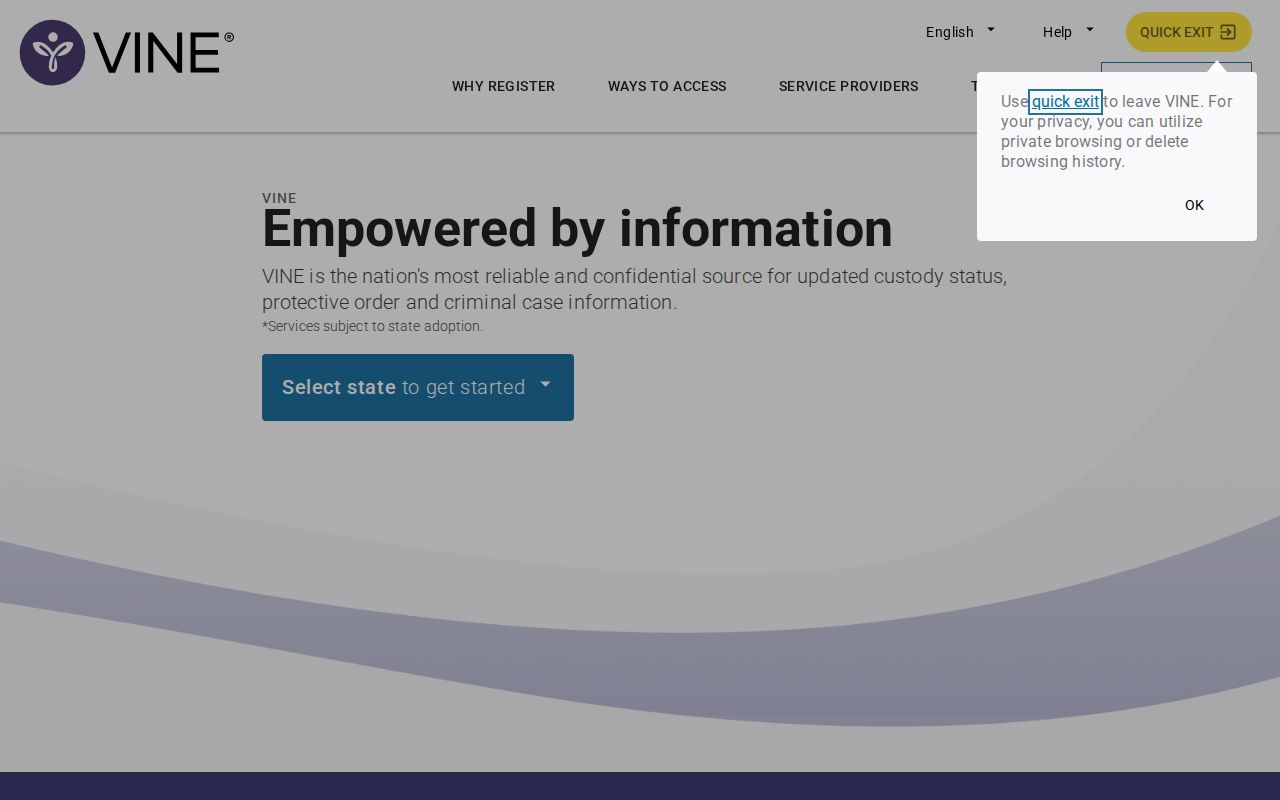
The screen is used for a specific-person search and alert registration, not for browsing a statewide list of released people.
Two Connecticut VINE Streams
Connecticut presents two registration paths. OFFENDERS carries CT DOC information. OFFENDERS WITH COURT CASES carries Judicial information. A registration in one does not automatically create the other. Someone who wants custody-change notices and eligible court-event notices should search and register in both streams.
| CT VINE stream | What it follows | When to use it |
|---|---|---|
| OFFENDERS | Connecticut Department of Correction information and supported custody events. | Use for CT DOC status and correctional release or placement notices. |
| OFFENDERS WITH COURT CASES | Connecticut Judicial case information and supported court events. | Use when case activity, probation-violation events, or court decisions are also needed. |
The CT DOC Victim Services Unit explains the two registration tabs.
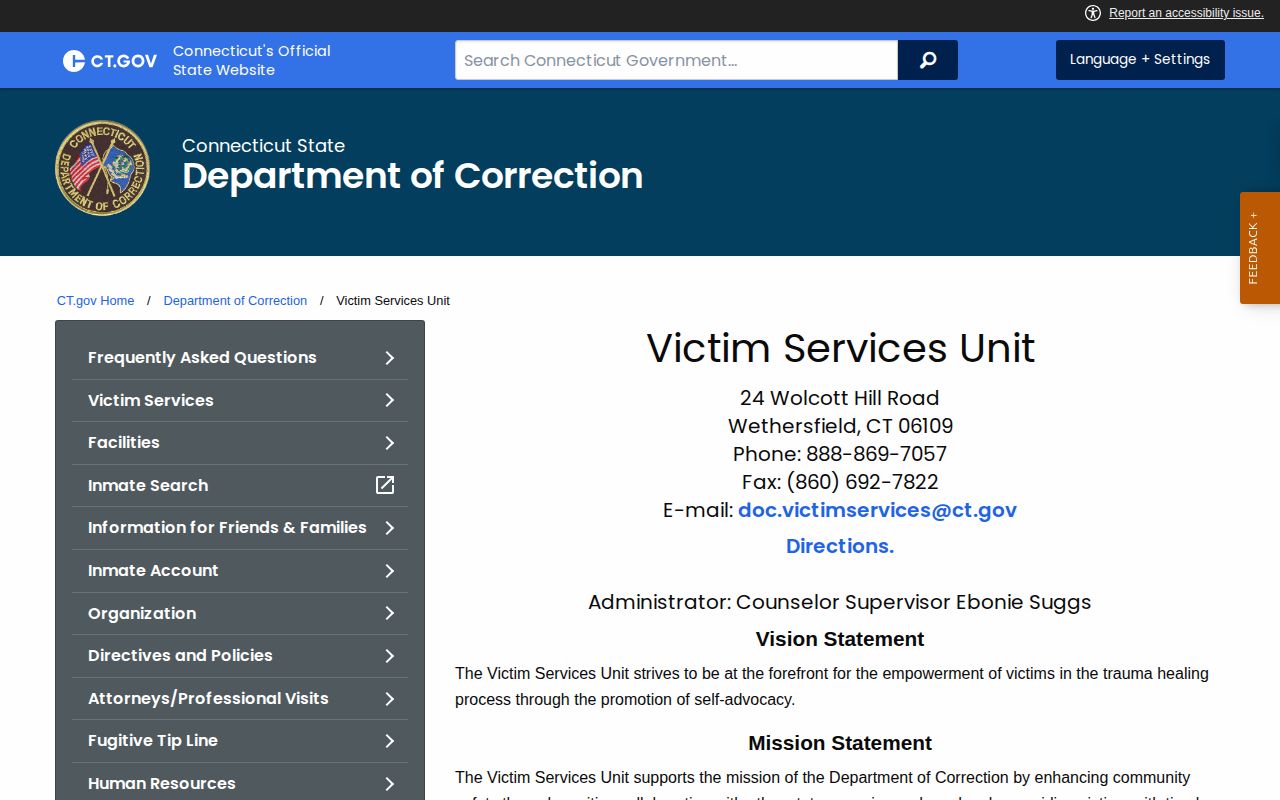
The official directions make dual registration the key Connecticut-specific step for people who need both types of notice.
The distinction also prevents a court notice from being mistaken for a correctional release. A Judicial event may explain a hearing, decision, or probation issue without showing where the person is held. A DOC event may report a custody or community-placement change without supplying the full court disposition. Compare the name and other identifiers in both streams, then keep the source label with any notice. That context is vital when two alerts arrive close together.
Search One Connecticut Inmate
Use enough identifying facts to avoid selecting a person with the same or a similar name. The current interface determines which fields are available. Search only the stream that fits the first question, then repeat the process in the second stream if both correctional and case-event coverage is wanted. A CT DOC number can be checked against the state correctional source when it is known.
- Open VINELink and choose Connecticut from the state list.
- Select OFFENDERS for CT DOC information or OFFENDERS WITH COURT CASES for Judicial information.
- Enter the identifying information accepted by the current interface.
- Compare the returned identifiers and open only the record that matches the person sought.
- Read the source, location, status, and event language before drawing a conclusion about release.
- Repeat the search in the other stream when both custody and court notices are required.
CT DOC’s own search remains useful for comparing correctional identifiers and current operational status. The CT DOC Inmate Information Search shows the official correctional lookup.
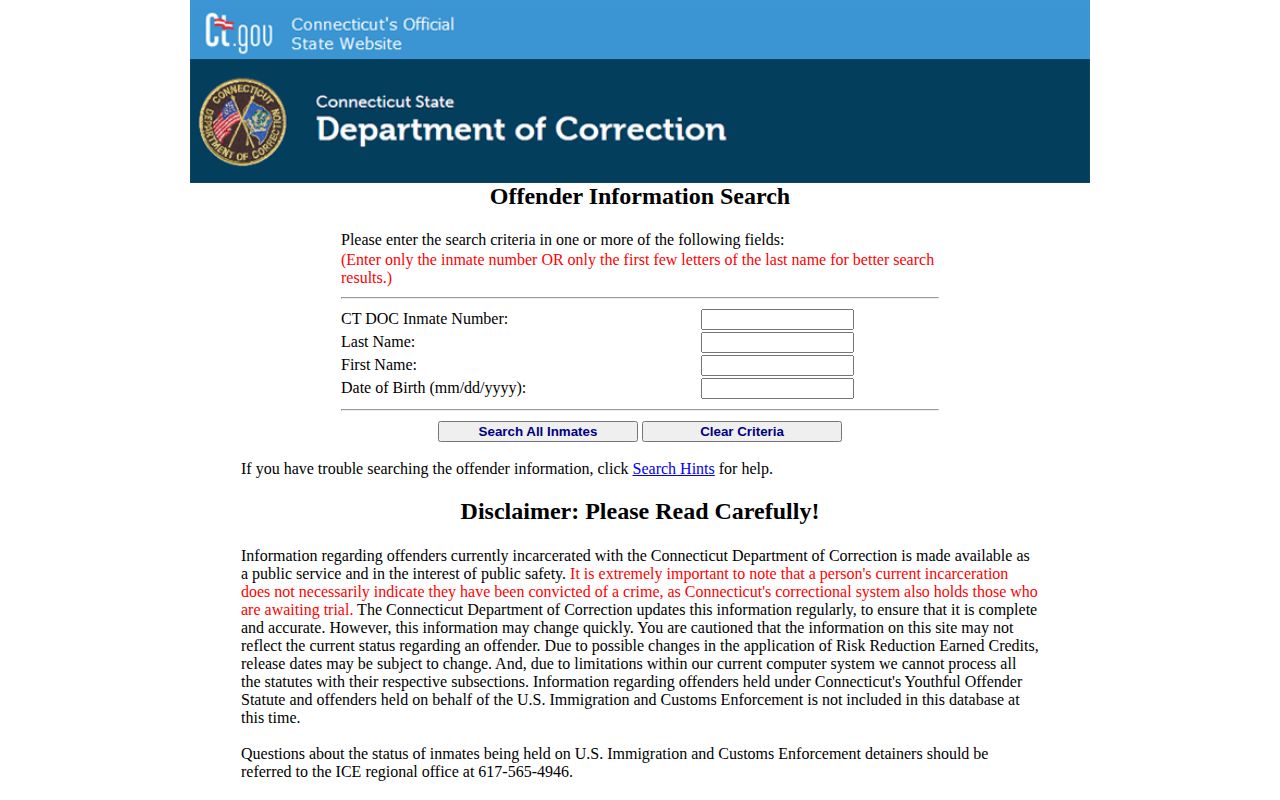
Its nightly current-custody feed can add context, but neither an absent CT DOC result nor an absent VINE result proves release.
Note: Very short municipal or pre-arraignment custody should not be assumed covered because no current official local-participation matrix guarantees every lockup feed.
Read Connecticut VINE Results
A VINE result should be read as a source-specific status message. The research confirms Connecticut’s two system streams and supported event types, but it does not confirm a permanent historical result for every discharged person. Avoid turning a no-result into a claim that someone was never held. The record may fall outside the chosen stream, may have moved beyond a current feed, or may involve a different custody system.
| Result element | What it can establish |
|---|---|
| Person identifiers | Help distinguish the intended person from another person with the same name. |
| Source stream | Shows whether the result comes from CT DOC information or Judicial case information. |
| Custody or event status | Reports the status language supplied by that source at that point in its update cycle. |
| Facility or location | May show the correctional location tied to the record, which is not always the same as legal discharge. |
| Release or placement notice | Signals a supported event but should be confirmed with the agency controlling custody. |
| Court event | Reports an eligible Judicial event, not a complete custody or supervision history. |
A person can be physically outside a prison and still remain under CT DOC authority through parole, special parole, transitional supervision, a halfway house, or another community placement. By contrast, final discharge ends the commissioner’s custody. VINE status, physical location, and legal discharge must not be treated as interchangeable terms.
Register Connecticut Release Alerts
After finding the correct person, choose the supported notification method shown by VINELink. CT DOC materials describe telephone, email, and TTY notification in English and Spanish. Judicial material also identifies the service as confidential. Text may be available through the current interface. Enter contact information carefully and finish every confirmation or PIN step that the live service presents.
- Open the matching person’s record in the correct Connecticut stream.
- Select the custody or court events offered for that record.
- Choose an available telephone, email, text, or TTY method.
- Enter the requested contact information and create or confirm a PIN when prompted.
- Complete the interface confirmation so the registration becomes active.
- Repeat the registration under the second stream if both DOC and Judicial notices are wanted.
Current Connecticut Judicial material lists 1-877-846-9428 as the CT VINE service number. An older DOC SAVIN page still publishes 1-866-277-7477. The Judicial number is the current reference, while the older number remains part of the official legacy material. Use the live service instructions when the two pages differ.
Note: Keep the registration PIN private and update the chosen contact method when a telephone number or email address changes.
When Connecticut VINE Alerts Stop
CT DOC says notifications stop after the person discharges and completes the court sentence. A post-incarceration probation violation is the stated exception because a later violation can produce new eligible events. If the person later re-enters the system, the interested person must register again. The prior enrollment does not follow every future custody episode forever.
This stop-and-restart rule shows why CT VINE is not an official historical discharge record. It is designed to send notices while a tracked custody or case process is active. When proof of a past final discharge is needed, Directive 4.4 points to a CT DOC records request for conviction information and other releasable information about a person discharged from DOC. A Judicial disposition can help explain the court outcome, but it is not a live custody registry.
The Connecticut Judicial lookup hub provides the statewide case-record route.
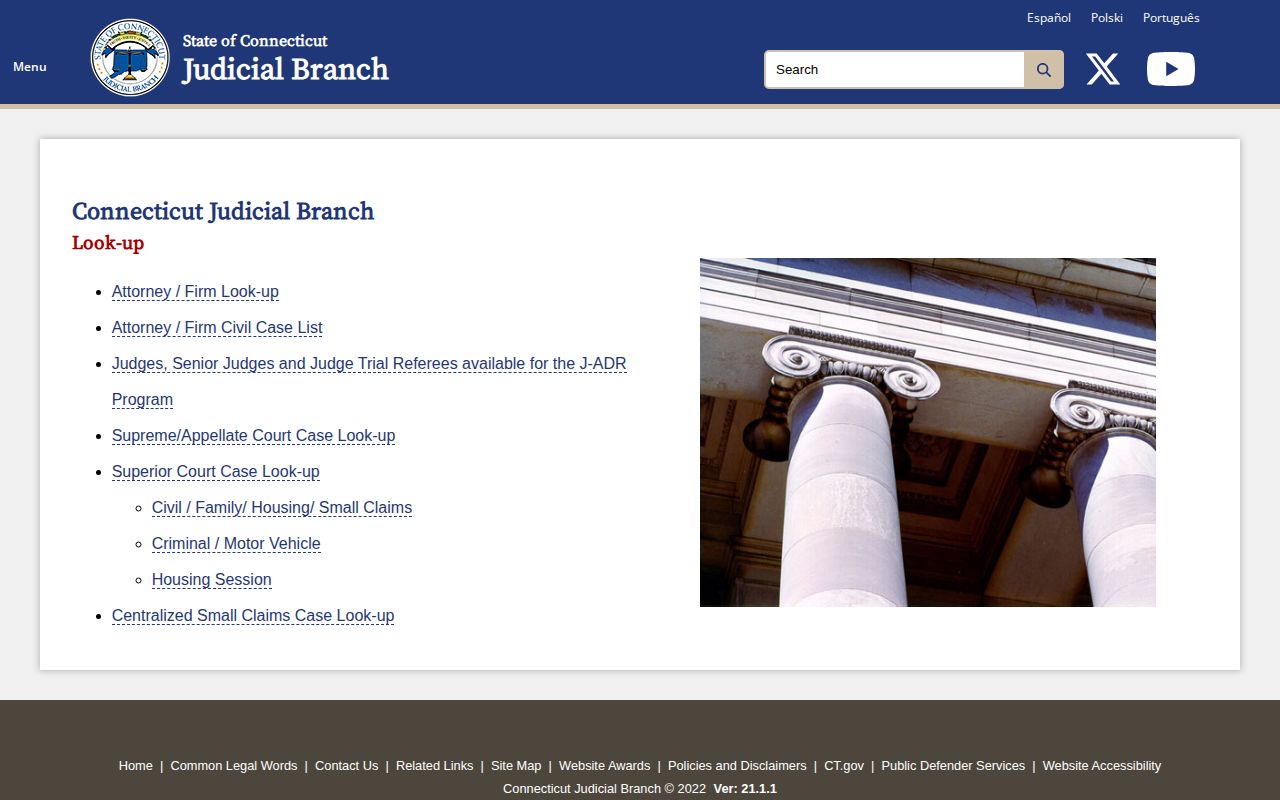
The court source can clarify dismissal, conviction, sentence, probation, or special parole when the public case is available.
Connecticut VINELink Search Limits
CT VINE does not replace every custody source. No official participation matrix confirms that each municipal police lockup sends brief holding data. Police custody can end with transfer to court or CT DOC rather than release to the community. Judicial Marshal court cells are also short-term holding points. A person who leaves one channel may still be in another government’s custody.
Federal incarceration is separate. Use the Bureau of Prisons locator for a federal person, including someone connected with FCI Danbury. BOP can display “Released” or “Not in BOP Custody,” though either result may coexist with another system or post-release supervision. Immigration detention is separate as well, and the ICE locator is a current-detention tool rather than a confirmed historical release archive.
Data timing matters even within Connecticut. CT DOC describes its public search as a nightly OBIS feed, while VINE depends on data supplied by participating agencies and systems. A court order, transfer, or release may therefore occur before the related public screen or alert changes. Check the event against the facility, court record, CT DOC source, or other maintaining agency when timing is critical. Do not keep submitting new registrations merely because a recent event has not appeared at once.
The BOP Inmate Locator is the federal search source.
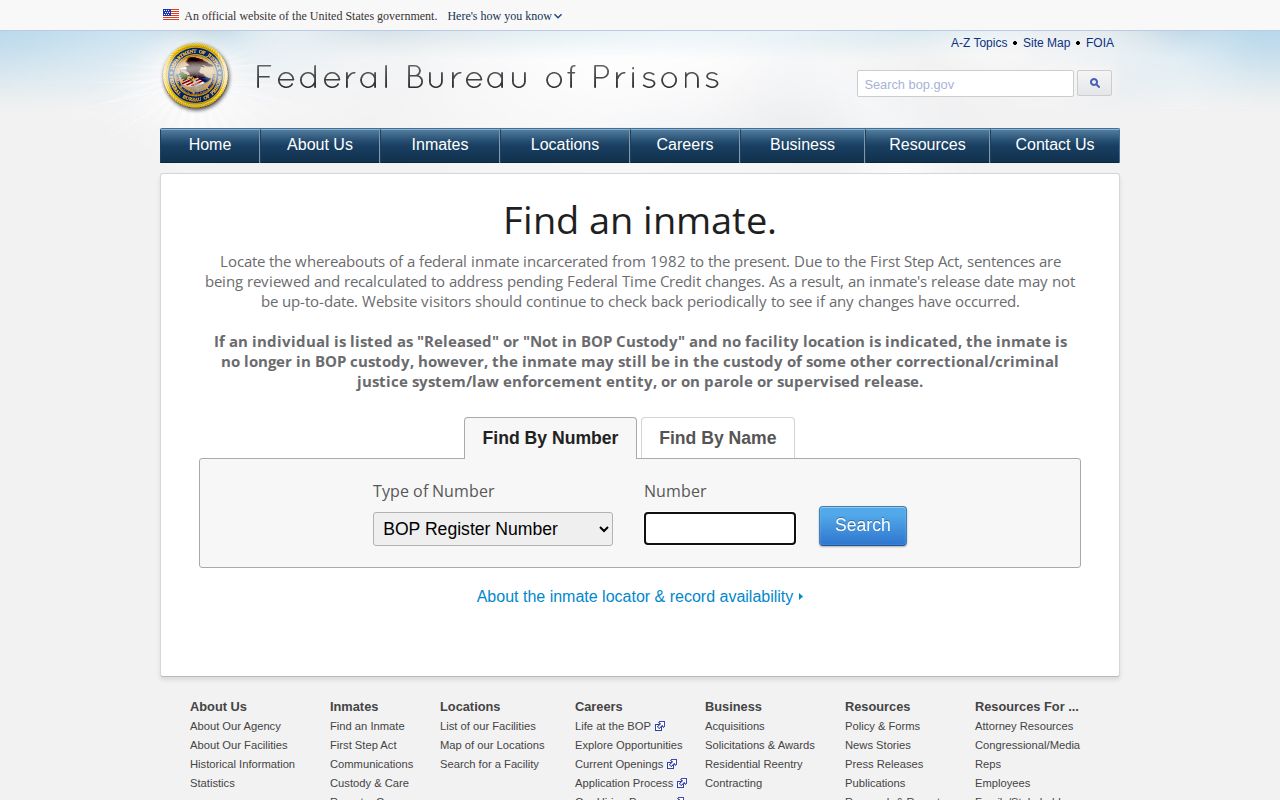
The federal screen is not part of CT VINE and should be used only for the federal custody question.
Confirm a Connecticut VINE Release
Treat an alert as a prompt to verify. For CT DOC custody, compare the person’s location, status, and sentence fields in the official current search. That search receives a nightly feed, so a same-day release or transfer may lag. If the person is absent or the public record does not establish final discharge, request releasable discharged-person information from CT DOC rather than inventing a historical status label.
For a court event, open the Judicial case record and read the disposition. For a parole hearing, the Board of Pardons and Paroles calendar and meeting minutes establish the decision, but a vote to parole uses an on-or-after date and is not proof the person left that day. For a broad Connecticut search path across current custody and release records, see the Connecticut released inmates hub.
Match the confirmation source to the legal event. CT DOC controls its correctional record. The Judicial Branch controls its case record and adult probation routing. BOPP minutes show the Board’s vote. BOP controls the federal locator, and ICE controls its current-detainee system. One source should not be stretched to answer a question assigned to another. This source-by-source check is more reliable than treating one missing name as proof that every form of custody and supervision ended.
The Connecticut Department of Correction home page identifies the statewide correctional system.
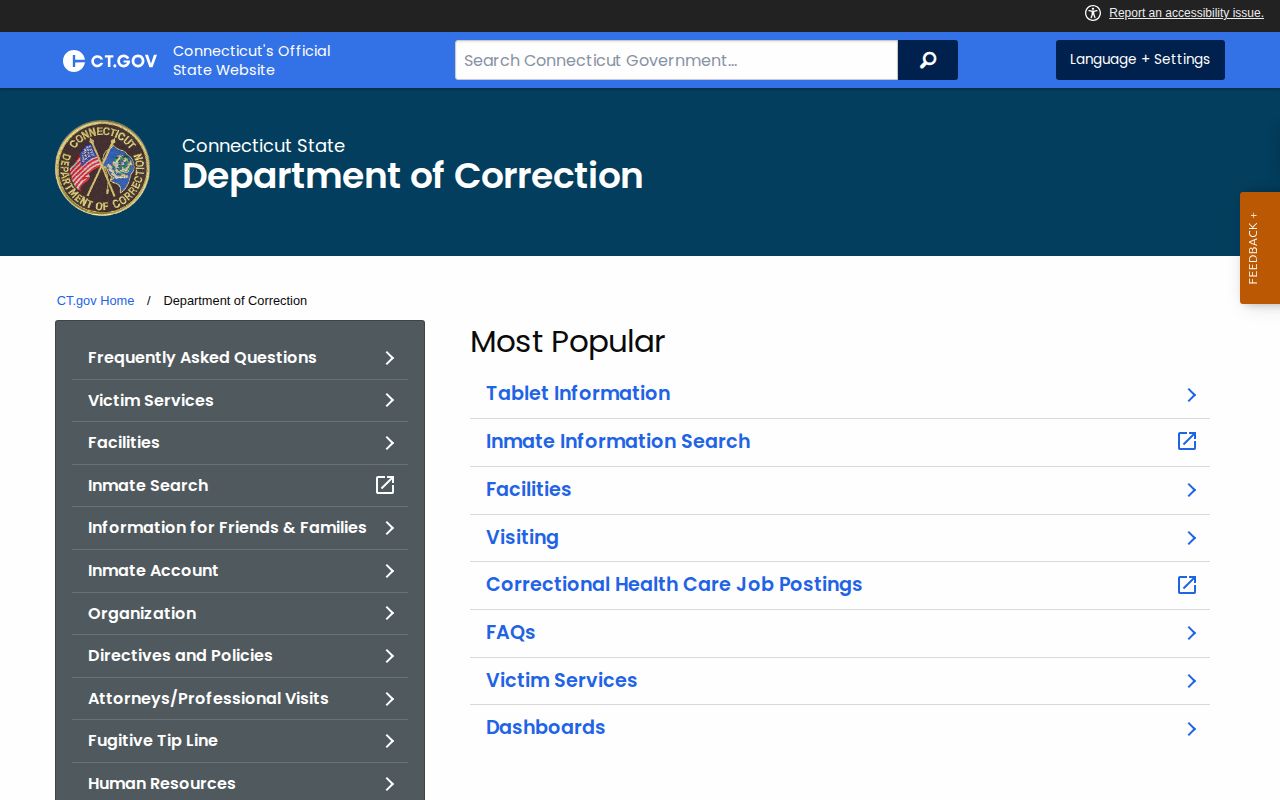
Connecticut’s unified state system makes CT DOC the main correctional confirmation point, while federal, immigration, and brief municipal custody require their own sources.
Public Record Search
Sponsored Results