
Connecticut Parole and Probation Split
Parole and probation can both require a person to follow rules in the community, but their legal source and supervising agency differ. Ordinary parole is a discretionary release granted by the State of Connecticut Board of Pardons and Paroles, or BOPP. Special parole is imposed by the sentencing court and begins after incarceration. CT DOC's Parole and Community Services Division, known as P&CS, supervises both forms. Adult probation is supervised by the Connecticut Judicial Branch Court Support Services Division, or CSSD. A person may also leave a prison for transitional supervision, a halfway house, or another DOC community status without being on ordinary parole.
The Board of Pardons and Paroles homepage shows the state board that makes parole decisions and publishes hearing access. The screen helps identify BOPP as the decision-maker, while P&CS remains the agency that handles field supervision after a parole release.
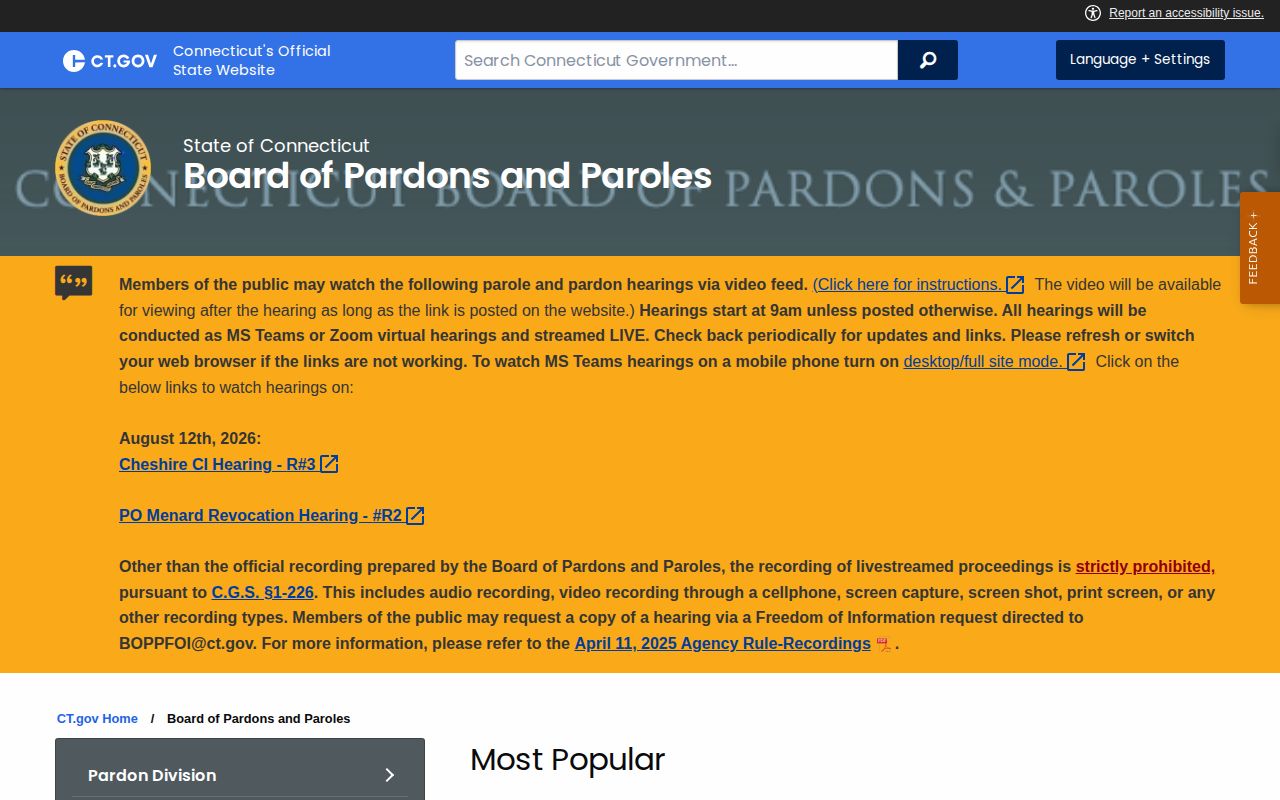
A Board grant is not probation. It is also not proof that the person left custody on the vote date, since placement and other release steps may remain.
Connecticut's release categories reinforce the split. Ordinary parole, special parole, transitional supervision, transitional placement, home confinement, and halfway-house placement can all put a person outside a prison while some form of correctional authority continues. End-of-sentence release may instead end the commissioner's custody, though a separate probation term can still follow if the court imposed one. The label attached to the sentence and release record therefore controls which office can verify the next stage.
| Feature | Parole or Special Parole | Adult Probation |
|---|---|---|
| Legal source | Board grant for ordinary parole; court sentence for special parole | Court sentence or disposition |
| Supervising system | CT DOC Parole and Community Services | Judicial Branch CSSD |
| Best first record | Current CT DOC record, then P&CS routing | Criminal case disposition, then Adult Probation directory |
| End point | Discharge from parole authority | Completion or court-approved end of probation |
- Parole
- Conditional release from confinement while legal supervision continues.
- Special parole
- A court-imposed supervision term that follows incarceration.
- Probation
- A court-ordered sentence served in the community under Judicial supervision.
- Discharge
- The formal end of the relevant custody or supervision authority.
Verify Connecticut Post-Release Supervision
No confirmed public portal searches every Connecticut parolee and probationer by name. Verification works best as a short routing process. Begin with the known custody and sentence facts, then use the official source that owns that part of the record. A current prison roster is not a historical release list. Likewise, a court disposition can establish that probation was ordered but does not act as a live roster of probation officers or day-to-day compliance.
- Search the CT DOC current offender system if the person left state correctional custody or may still be in a DOC community status. Use a name or CT DOC number when available.
- Read the status and date fields with care. A person in a DOC-controlled community placement is not fully discharged merely because the person is outside a prison.
- For parole or special parole, use the P&CS district and unit directory to route the question. Staff access and disclosure rules still apply.
- For probation, search the statewide criminal case disposition for a probation term, then use the Adult Probation office directory to locate the responsible CSSD office.
- If the public record does not settle the question, request an identified existing record from CT DOC, BOPP, or the Judicial Branch rather than relying on a no-result.
The CT DOC Inmate Information Search is the official current-system starting point for a state correctional case. Its nightly data scope means it should not be described as a full archive of all people who completed supervision.
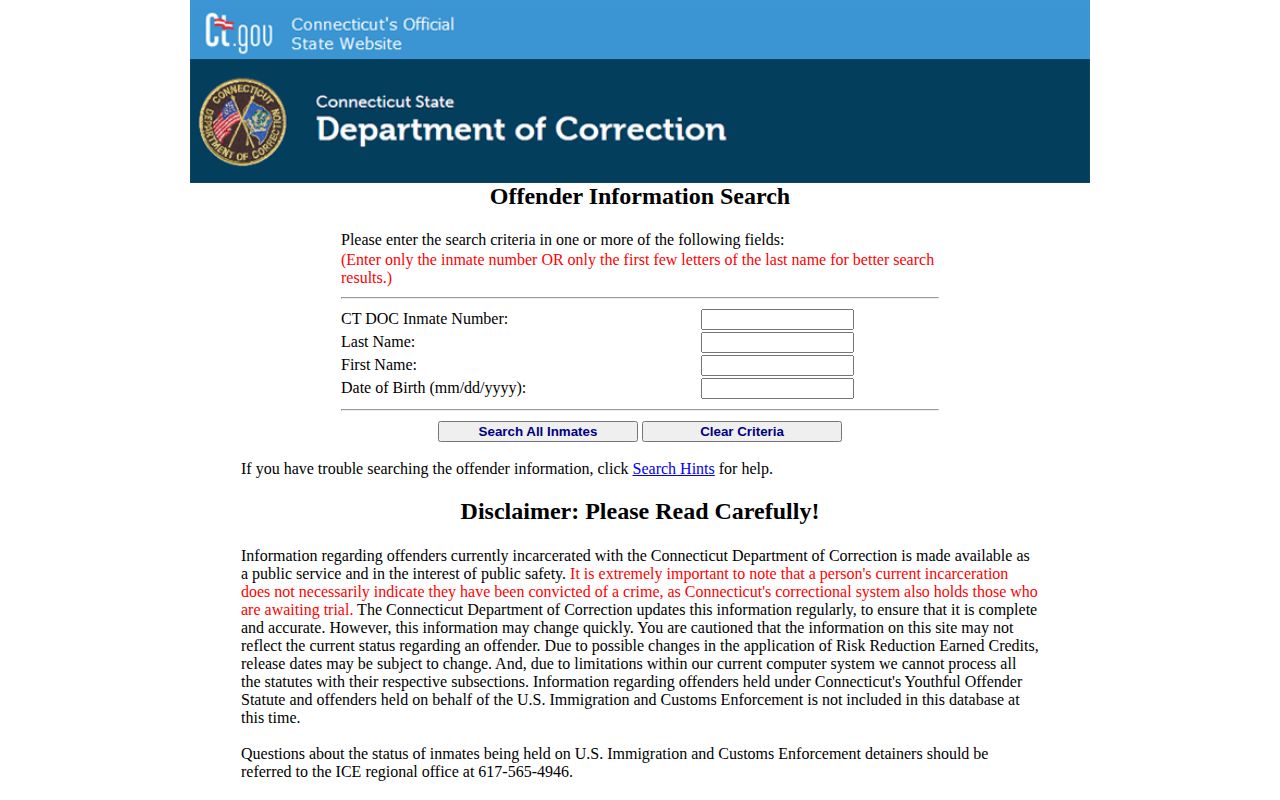
A fully discharged person may no longer be present. Directive 4.4 instead confirms that conviction information for a person discharged from DOC can be requested from the agency.
For a broader released-person search before the supervision type is known, the Connecticut released inmates search path separates DOC, court, VINE, federal, and records-request channels.
Note: A missing public result does not prove that a Connecticut supervision term never existed or has formally ended.
Connecticut Parole Supervision Routes
CT DOC P&CS supervises people released under the authority of the commissioner and BOPP, and it enforces the terms placed on those releases. Its organization includes district offices in Bridgeport, Hartford, New Haven, Norwich, and Waterbury, along with specialized units. The central directory is useful for routing, but it is not an open promise that any caller will receive case details. An agency may confirm only information that is public and appropriate to disclose.
The official DOC Management Information Systems page describes the nightly offender feed and the public record fields that support a current-status check.
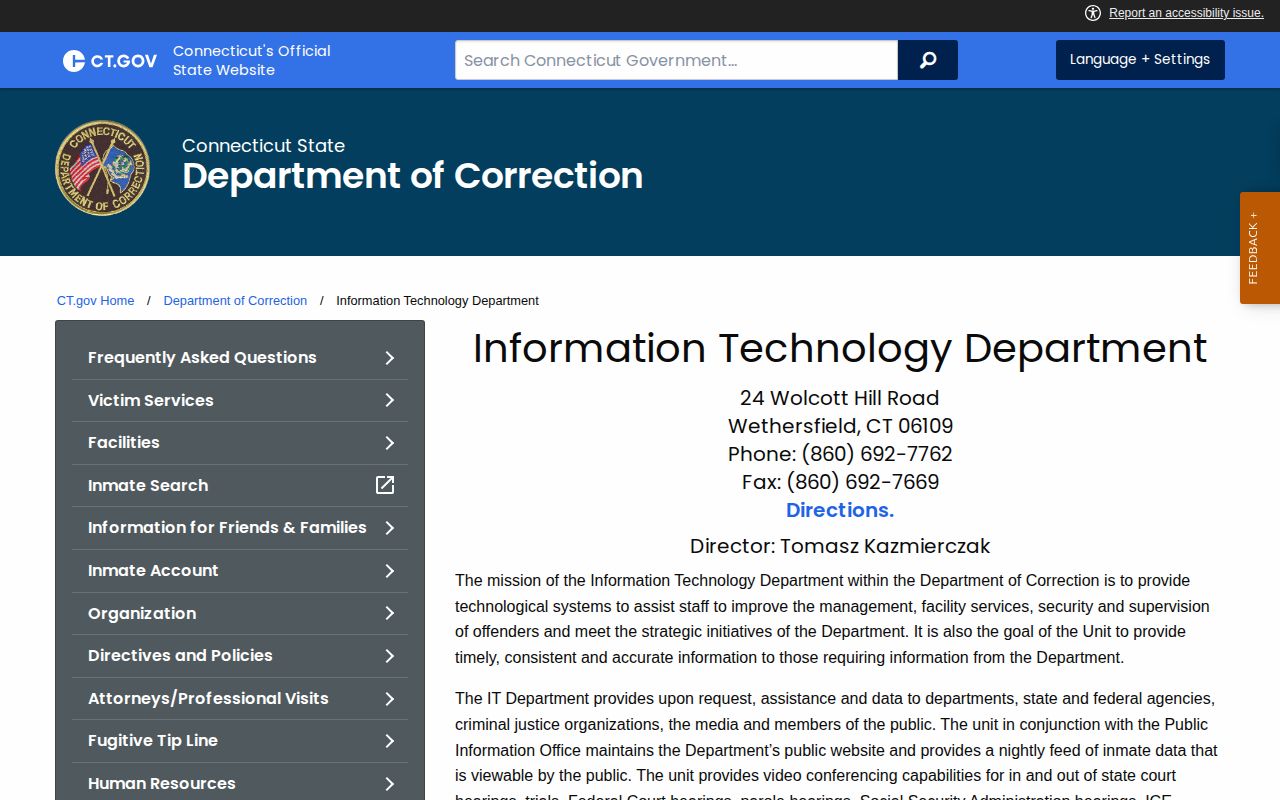
The captured DOC information page also explains that the public offender feed is refreshed nightly, so a same-day change should be checked with the responsible agency.
Conditions vary with the Board action, court order, release plan, and governing law. At a high level, P&CS monitors compliance and can begin a violation process. The precise condition set belongs to the person's official paperwork, not to a general description of Connecticut parole.
Connecticut Probation Through CSSD
Adult probation belongs to the Connecticut Judicial Branch, not BOPP and not P&CS. The useful public sequence is to locate the criminal or motor vehicle case, read the disposition for a probation term, and then consult the statewide Adult Probation office directory. The court record can help distinguish probation from special parole. It does not provide a real-time account of supervision activity or identify every current officer assignment.
The Connecticut Judicial lookup hub brings the statewide case search tools together. A disposition can explain why someone who finished incarceration remains subject to a court sentence.
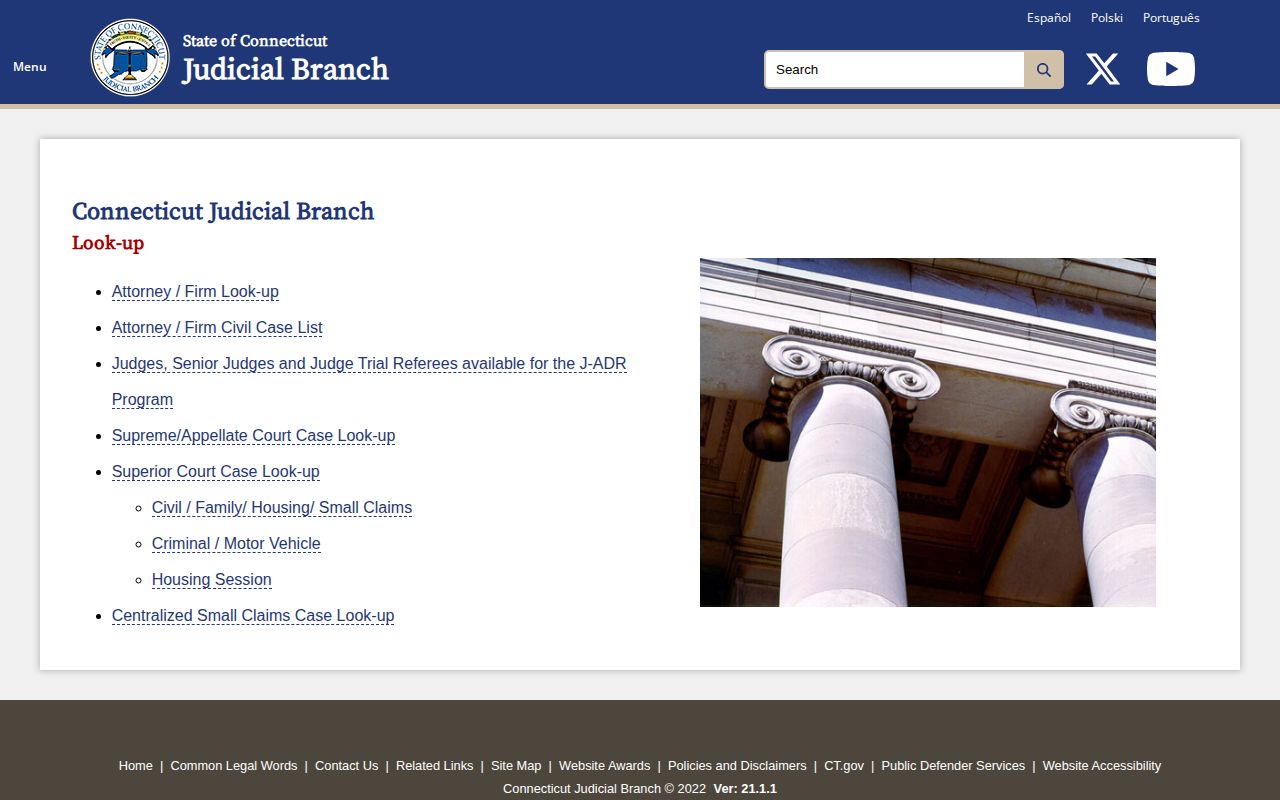
Sealed, erased, youthful-offender, and otherwise restricted cases may not appear publicly. That limit should not be read as proof that probation has ended.
A person can complete a prison term and then start probation if the sentence calls for it. That is different from a Board grant and from special parole, even though each may involve rules in the community.
Note: Use the court disposition to identify probation, then use the CSSD directory only to find the office that owns the case.
Connecticut Parole Violations and Absconders
BOPP defines an absconder as a person who fails to keep contact with the parole system. P&CS may remand the person and prepare a violation report. That report serves as a warrant application and begins the revocation process. CT DOC's Parole Fugitive Investigations Unit works on parole absconders, transitional-supervision escapees, and selected high-profile cases. Research found no official public statewide person-name list of parole absconders, so a general web name search should not be presented as the state method.
The Parole Fugitive Investigations Unit page lists a 24-hour tip line at 203-346-7830 and an anonymous-tip email. These contacts are for fugitive information, not for routine supervision verification or release confirmation.
CT VINE may send eligible notices for escape, absconding, probation-violation events, and parole matters. The CT DOC Victim Services page explains the Connecticut notification streams and registration choices.
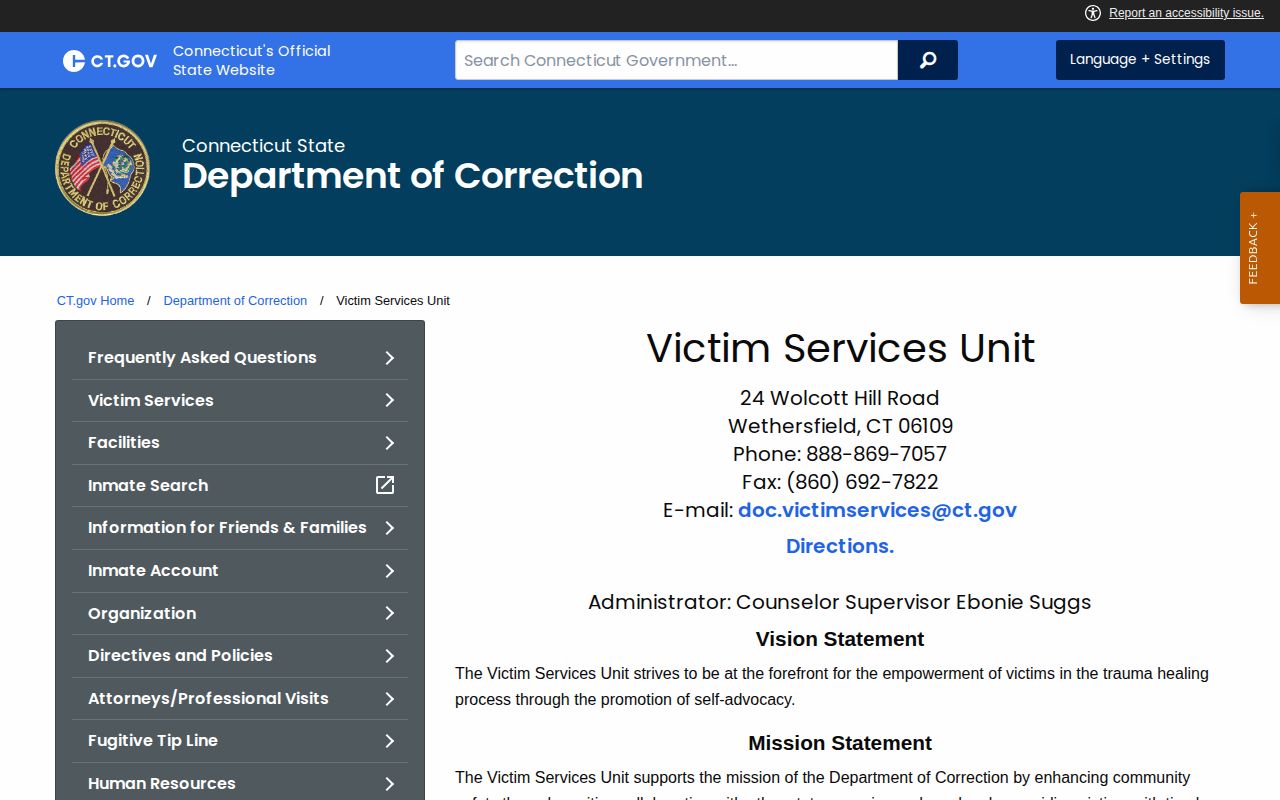
VINE is an alert channel, not a permanent discharge archive. Connecticut separates the DOC offender stream from the Judicial court-case stream, so both registrations may be needed for both types of event.
Connecticut Release Is Not Discharge
Physical release, parole supervision, probation, and final discharge are separate Connecticut events. This distinction is especially important when one record says a person left a facility while another still shows legal control. A parolee may live at an approved residence and remain under P&CS. Someone on special parole remains under that same correctional division. A person who has ended incarceration may begin a separate CSSD probation term. Someone else may leave at the end of sentence with no supervision at all.
The FY2024–25 BOPP digest makes the difference concrete. It reported 193 early parole discharge reviews and 57 early terminations. Those figures describe a review process, not an automatic rule that early discharge follows release. Section 54-129 governs statutory parole discharge, while the supervising office or an official records request remains the sound path for a named person's documentation.
No public third-party portal was confirmed for downloading a named person's Connecticut parole discharge certificate. Ask the supervising P&CS office or the appropriate BOPP or CT DOC records office for an identified record. A court probation record follows Judicial procedures instead.
Discharge can also affect notification. DOC states that CT VINE notices stop once the person is discharged and the court sentence is complete, apart from the stated exception for a later post-incarceration probation violation. That notice rule is useful context, but the absence of a new alert is not itself a discharge certificate. If a person later re-enters the system, registration must be made again.
Note: A release date answers when custody changed; a discharge record answers when the relevant correctional or court authority ended.
When Connecticut Supervision Ends
Completion must be checked within the system that imposed and supervised the term. For ordinary or special parole, begin with P&CS and use BOPP or CT DOC records when formal proof is needed. For adult probation, use the court case and the responsible CSSD office. Connecticut's Freedom of Information Act can support a request for an existing nonexempt agency record, but it does not require an office to create a new certificate or release information barred by law.
The CT VINE search can help track an eligible event while supervision is active. It should not be used as the sole proof of discharge.
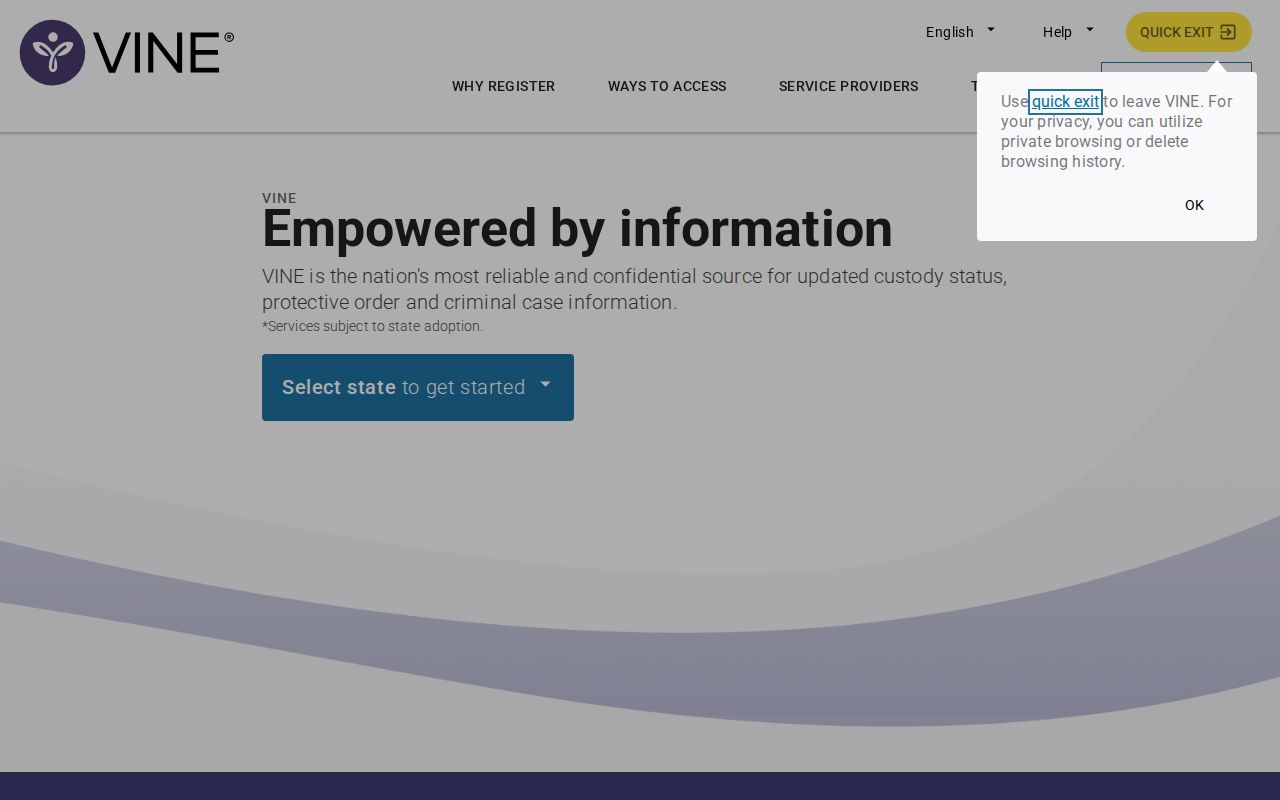
DOC says VINE notices stop after discharge and completion of the court sentence, subject to a later post-incarceration probation violation. A later entry into the system requires registration again.
Ask for a specific record with the person's identifying details, the type of supervision, and the relevant date range. Records may be withheld or limited when an exemption, erasure rule, or other access restriction applies. Confirmation from the agency that owns the term is stronger than inferring completion from silence in a public portal.
Connecticut's public-records law generally supports prompt inspection and copying of nonexempt agency records. A useful request names the person, identifies parole, special parole, or probation, and asks for a defined existing document such as a discharge order or final status record. Medical material, erased matters, protected victim information, and other exempt content may be withheld. DOC records should go to DOC, Board records to BOPP, and court probation records through Judicial procedures. Keeping those channels separate reduces delay and avoids asking one agency to certify another agency's term.