
Connecticut Parole Board Authority
The official agency is the State of Connecticut Board of Pardons and Paroles, commonly shortened to BOPP. It decides whether an eligible person should receive discretionary parole and sets conditions and an on-or-after date when parole is granted. Its role differs from CT DOC, which holds and supervises people, computes correctional dates, and records custody changes. A BOPP hearing sits between statutory eligibility and any later release from a facility.
The BOPP homepage posts near-term livestream information and directs the public to Board material. Hearings generally begin at 9 a.m. unless the agency posts a different time, and remote proceedings may use Microsoft Teams or Zoom.
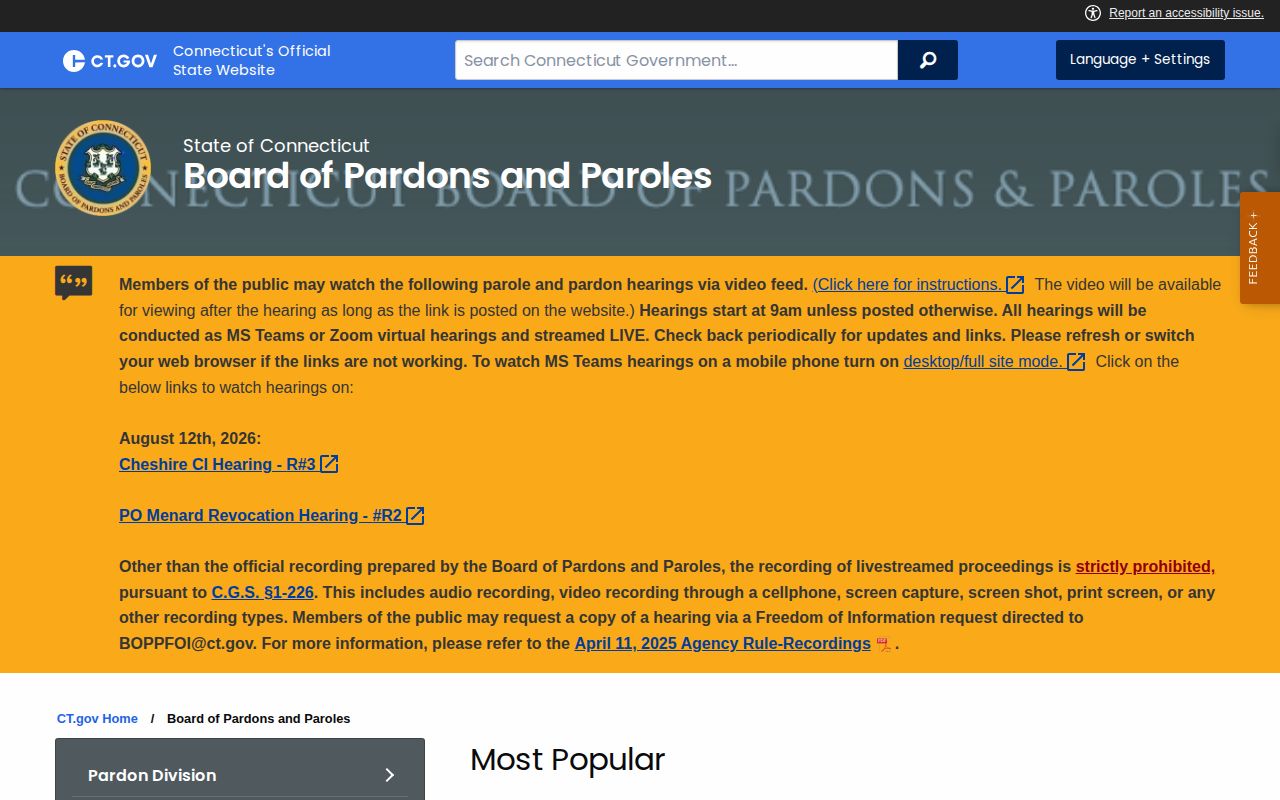
The homepage is the best source for same-day access notes. The meeting calendar remains the official source for event dockets, revision history, and minutes.
- Eligibility date
- The point at which the Board may consider parole under the governing law.
- Docket
- The pre-hearing agenda listing the matters set for an event.
- Minutes
- The post-hearing record that states the Board's action.
- On-or-after date
- The earliest date authorized by a grant, not a promise of physical release that day.
Find Connecticut Parole Hearing Dates
The State Agency Public Meeting Calendar is the central Connecticut parole hearing schedule. It is an event calendar, not a person-name decisions database. Filter or browse for the Board of Pardons and Paroles, then inspect the event that matches the date, institution, or hearing type. An event can contain the date, purpose, meeting type, contact information, agenda or docket, minutes, and a history of changes.
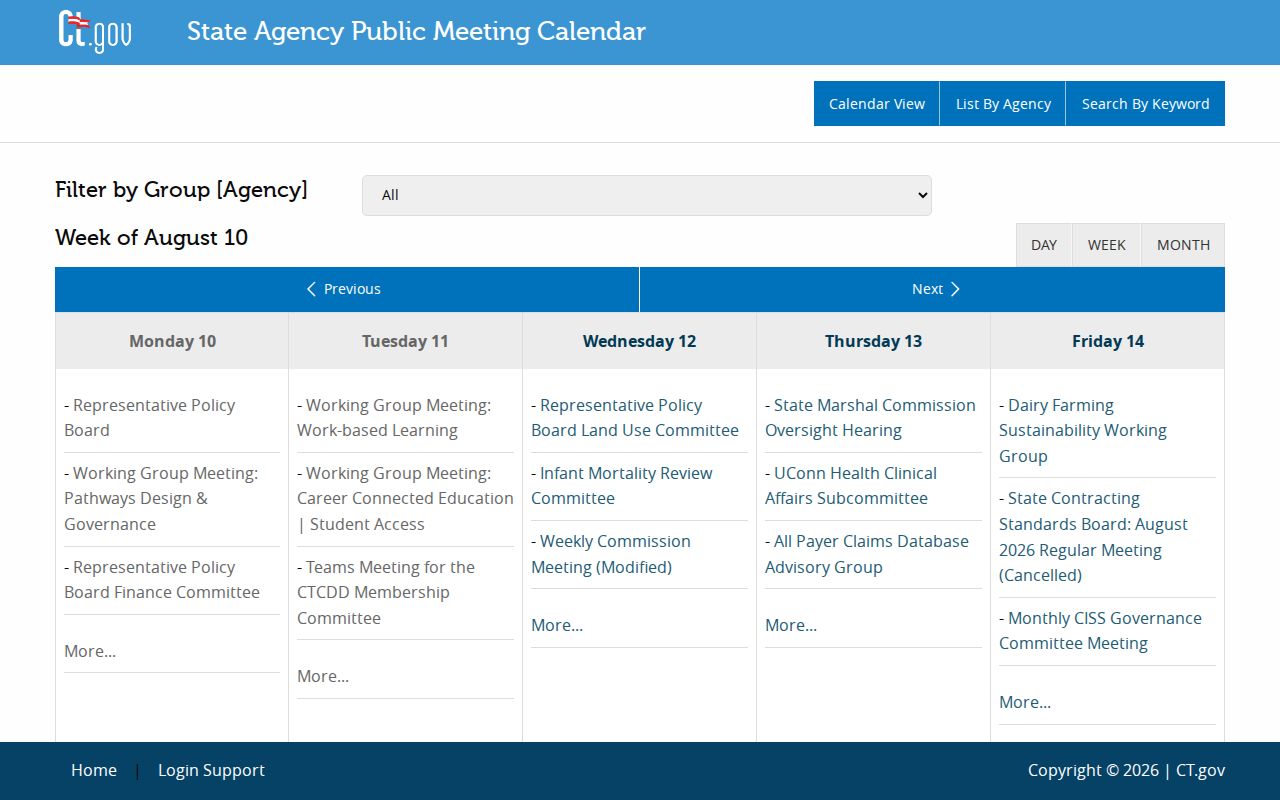
The agency filter narrows a statewide list to BOPP events. Searchers may still need to open more than one event because the calendar is organized around meetings rather than a single inmate index.
- Open the State Agency Public Meeting Calendar and select or locate the Board of Pardons and Paroles.
- Review events near the expected date and note the institution or hearing purpose shown in the title.
- Open the event and download the latest agenda or docket. Search that document for the person's name or inmate number when those details are listed.
- Check the event again shortly before the hearing. Revised dockets and access links may be added after the first filing.
- After the hearing, return to that same event and look for its minutes attachment.
Note: Special youth and lengthy-sentence hearing video links may not appear until the morning of the scheduled proceeding.
Read Connecticut Parole Decisions
Connecticut parole decisions are found in meeting minutes attached to the calendar event. The agenda or docket shows what the Board planned to hear. Minutes record what it did. Research did not confirm a separate official statewide database that accepts a person's name and returns all BOPP decisions. This event-based method means the hearing date or institution can be as useful as the name itself.
The BOPP event 32050 record is an official example with both pre-hearing and post-hearing documents. It shows how one event page becomes the record path from docket to result.
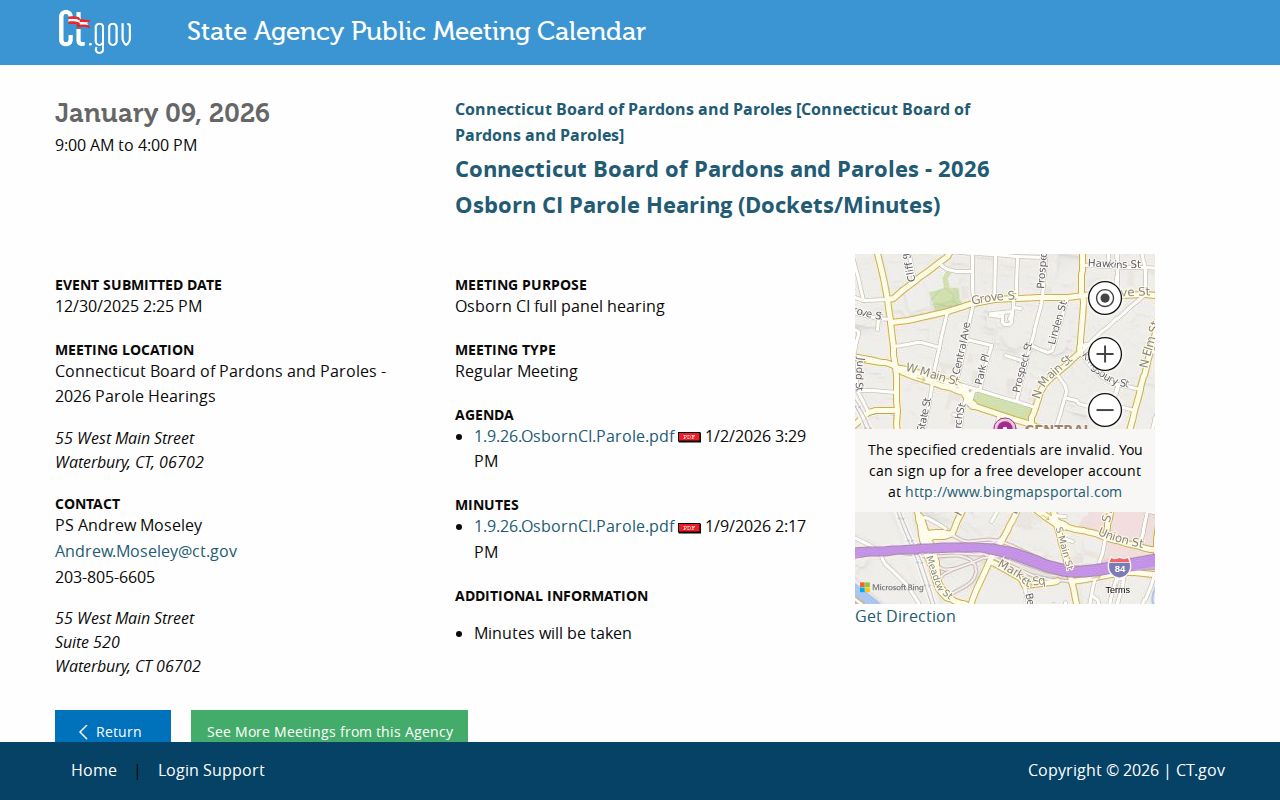
Minutes may identify a person, inmate number, institution, review type, and result. The exact fields depend on the type of proceeding and the document.
- Open the same calendar event used for the docket and look for a Minutes link.
- Open the minutes and search within the document for the person's name or inmate number.
- Read the result in context, including any on-or-after date, conditions, or later hearing information.
- Do not turn a grant date into an actual release date. Check CT DOC, CT VINE, or an official correctional record for the custody event.
The CT DOC offender search process explains the current-system fields and the records-request fallback for someone no longer in the public feed.
Connecticut Parole Hearing Outcomes
BOPP minutes should control the wording used for an outcome. Common records include a grant, denial, revocation with reparole, or revocation without a new parole hearing date. A matter may also move to another date or appear on a revised docket. These outcomes do not all mean the same thing, and none should be inferred from a missing attachment.
| Recorded outcome | What it means | Next record to check |
|---|---|---|
| Parole granted | The Board approved parole and may set an on-or-after date and conditions. | CT DOC or VINE for actual departure |
| Denied | The Board did not grant parole at that hearing. | Minutes for reasons and any later hearing |
| Continued or rescheduled | The matter was not finally decided on the expected date. | Revised docket or later event |
| Revoke and reparole | Existing parole was revoked and a new parole action was ordered. | Minutes and DOC custody status |
| Revoke, no new hearing date | Parole was revoked without a new date stated in that result. | Minutes and later official filings |
A denial is not a new sentence. BOPP says reasons are provided verbally and in writing, and the Board may set another hearing or deny without one. Decisions are final. Reconsideration is rare and is associated with a material sentence change, serious health decline, or compelling new information.
Note: Read the whole result line and any date label; a short status word can omit the next step or a key condition.
Connecticut Parole Eligibility Rules
Connecticut General Statutes §54-125a supplies the principal eligibility framework. Many people serving definite sentences longer than two years may be considered after 50 percent of the controlling sentence, less applicable credit. Designated violent offenses generally use an 85 percent threshold. Statutory exclusions and special rules can change the analysis. These percentages describe when consideration may occur, not when release must happen.
BOPP applies a legal standard that asks whether there is a reasonable probability the person will live and remain at liberty without violating the law and whether release is compatible with the welfare of society. The Board generally says an eligible person is heard about six months before the statutory eligibility date. A person may waive consideration and instead discharge at sentence completion.
Risk Reduction Earned Credit can affect some sentence calculations when the law permits, but credit does not create a right to parole. Connecticut allows up to five discretionary credit days per month for an eligible committed person under §18-98e. Credits may be withheld or removed, and the statute excludes listed convictions and offender categories. A public date should therefore be read in light of the controlling sentence and actual awarded credit, not a broad estimate based on time served.
When a grant leads to community supervision, the roles after release are covered under Connecticut Probation & Parole. CT DOC Parole and Community Services supervises parole and special parole, while Judicial CSSD handles adult probation.
Connecticut Youth Parole Hearings
Connecticut has a distinct parole framework for qualifying youth and lengthy sentences. According to the BOPP youth and lengthy-sentence hearing page, a qualifying sentence of 50 years or less can lead to eligibility after 12 years or 60 percent, whichever is greater. For a sentence over 50 years, the stated threshold is 30 years, subject to the governing conditions.
Public Act 23-169 expanded the framework to qualifying older dispositions for crimes committed before age 21. BOPP says hearings under that expansion began in October 2024. This policy change does not make every long sentence eligible. The qualifying statute, offense date, age, sentence, and exclusions must all be checked.
The Board posts public video links for these special hearings on the morning of the event. That timing is another reason to revisit the BOPP page and calendar shortly before the hearing rather than assume an earlier docket contains the final access details.
Connecticut Parole Calendar Revisions
The public meeting calendar has no fixed weekly or monthly refresh cycle. Its update pattern is tied to each event. Official examples show why that matters. A March 9, 2026 Carl Robinson Correctional Institution event was first posted March 3, revised March 4, and received minutes March 9. A March 4 Willard-Cybulski event was filed February 25, revised February 26, and received minutes on the hearing date. An April 22 MacDougall event had several revised dockets on April 15 and 16, followed by minutes on April 24.
This revision history is part of the Connecticut parole record trail. Save the event details, but use the latest docket for the planned hearing and the later minutes for the result. A downloaded early agenda may be stale if the calendar shows a newer revision.
Event-driven publication also explains why a search on the hearing date may look incomplete. The hearing may have occurred even though minutes have not yet been uploaded, or a late revision may have moved a matter to another event. Use the calendar's change history and attachments together. If the expected name is absent, check the newest docket first, then nearby BOPP events tied to the same institution before drawing a conclusion.
The official calendar image above illustrates the statewide event list. BOPP's own page adds the near-term livestream layer, while the event page holds the durable docket and minutes attachments.
Note: A revised docket may change the planned list, so confirm the newest attachment rather than relying on a saved early copy.
Parole Vote Versus Connecticut Release
A BOPP vote to parole establishes Board approval, not proof of a completed release. The Board describes the date as on or after. Placement at an approved residence, sponsorship, transportation, required conditions, discipline, new charges, or rescission can delay or defeat physical departure. The minutes answer what the Board decided. CT DOC, VINE, or a formal agency record answers whether the custody event later occurred.
The CT DOC Inmate Information Search is a current-system check for a person within the state correctional system. Its data is refreshed nightly, so it may lag a same-day event.
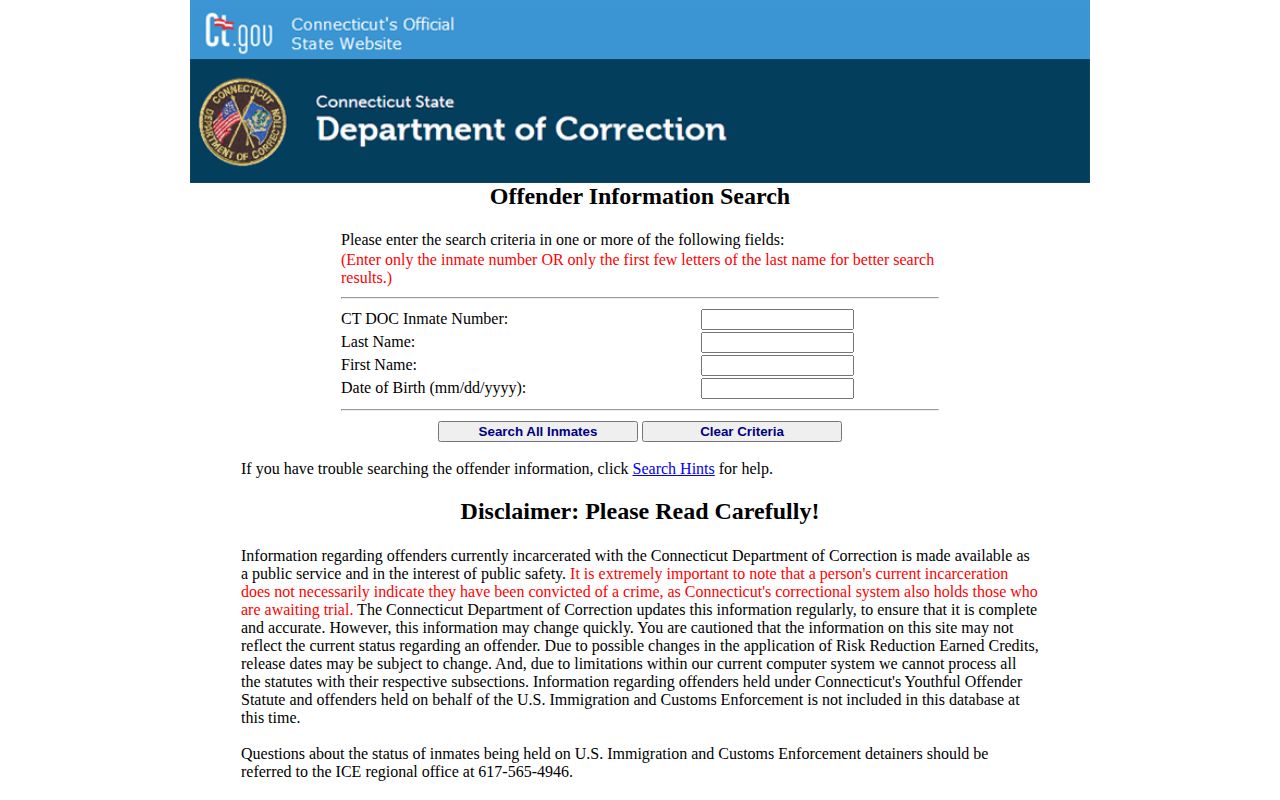
A fully discharged person is not confirmed to remain in the public search. For that case, Directive 4.4 and the DOC records process supply the safer historical route.
The CT VINE portal can provide eligible custody and court-event notices for one registered person.
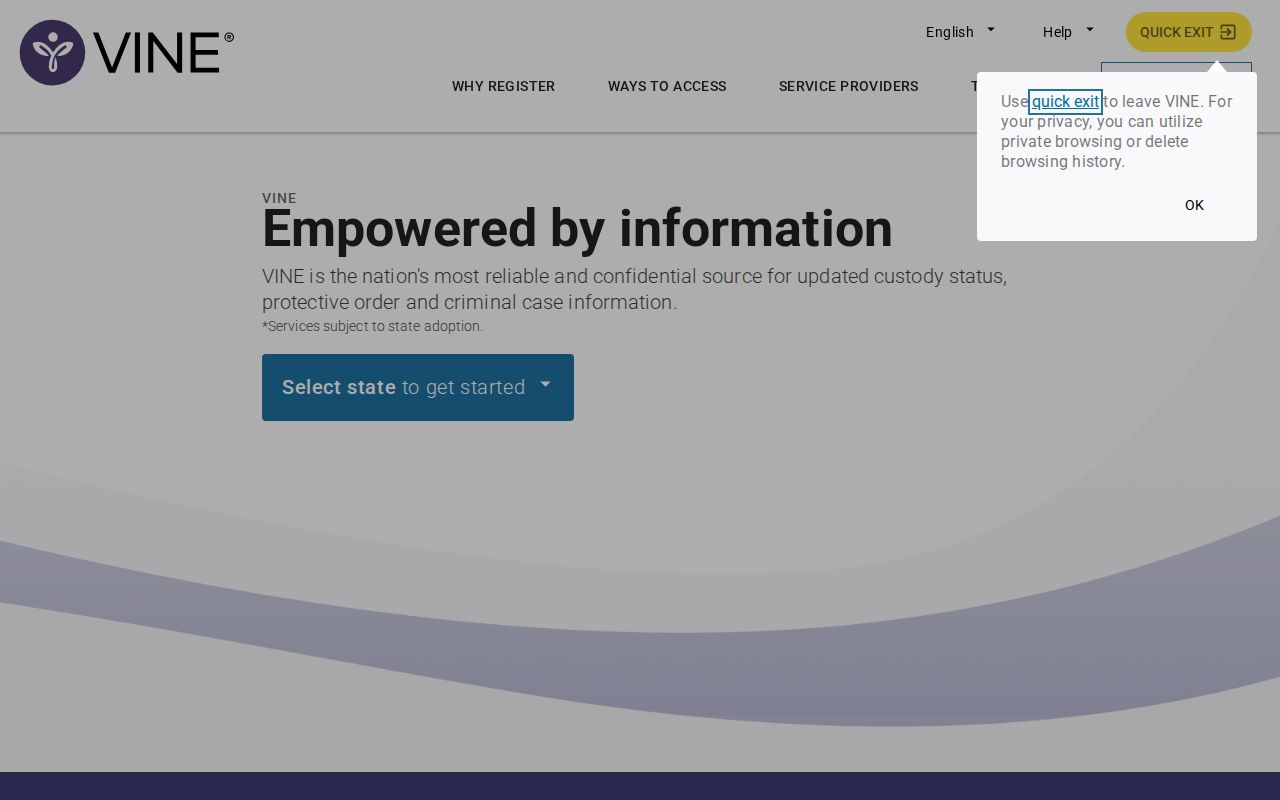
Connecticut divides VINE into an OFFENDERS stream for DOC information and an OFFENDERS WITH COURT CASES stream for Judicial events. Registration in both may be needed when both types of notice matter.
CT VINE is strongest as a forward-looking alert channel. It is not a permanent archive of Board minutes, and a no-result does not cancel the action recorded by BOPP. Likewise, the nightly CT DOC feed can show a later correctional status without preserving every step that led to it. The calendar, the minutes, and the custody source answer different questions and should be read as a sequence.
Use the inmate number, full name, hearing event, and date range when asking an agency for a record. This keeps the request tied to an existing docket, minute, release entry, or discharge record and avoids treating an approved date as a fact that has not yet occurred.